Beachwatch 2025: What you found
Thank you to everyone who got involved with a beach clean and litter survey in 2025. Here's a breakdown of the results.
The results are in
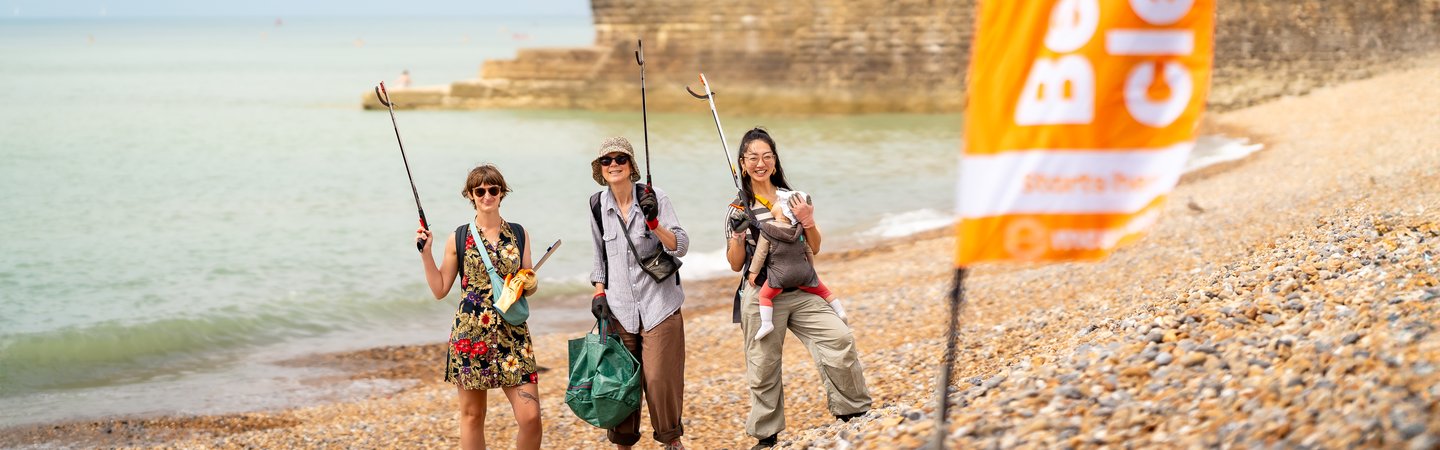
Across the UK and Channel Islands, more than 14,000 volunteers came together to remove over 600,000 litter items from our coastline.
They completed more than 1,100 litter surveys, providing vital data about the types and sources of litter polluting our shores. Find out what this year’s results tell us and the actions we’re taking to secure policy changes across the UK that will help clean up our beaches, for good.
If you want to check it out for yourself, why not take a look at our Beachwatch data dashboard?

What did the UK and Channel Islands results show?
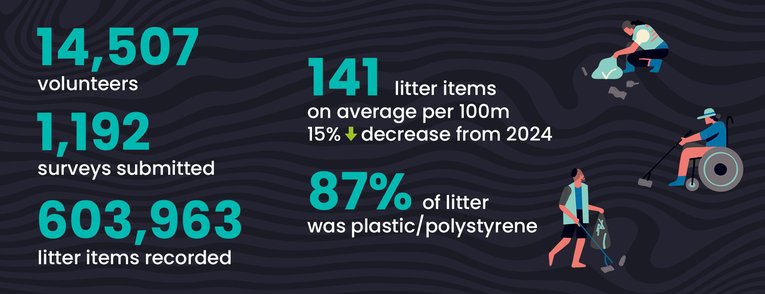
A staggering 603, 963 litter items were removed from beaches over 2025, weighing more than 11,400kg. An average of 141 litter items were found per 100m – a 15% decrease from 2024.
The three most commonly found items found across the UK and Channel Islands were:
- Small plastic fragments, found on 86% of beaches
- Single-use plastic wrappers, such as crisp, sweet and sandwich packaging, recorded on 80% of beaches
- Plastic caps and lids, present on 83% of beaches
1,192
litter surveys submitted in 2025
11.4
tonnes of litter removed from beaches
24, 938
volunteers hours spent cleaning and recording litter
Are you a policymaker?
Read our Policy Recommendation for Marine Litter
Plastic Pollution
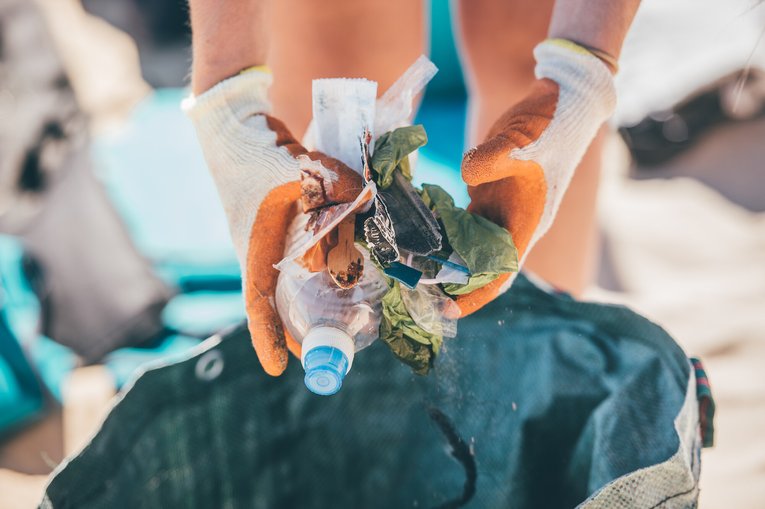
Plastic pollution remains persistent across the UK and Channel Islands, making up a whopping 87% of all litter items recorded. All top five items found on beaches in 2025 were made of plastic, and plastic items were recorded on 99.5% of surveyed beaches.
The litter data from 2025 does, however, reveal signs of progress, with average litter levels across the UK and Channel Islands dropping by 15% between 2024 and 2025, while single‑use plastics presence fell by 18%. This is strong evidence that effective policies, such as the bans on various single‑use plastic items like cutlery, are making a measurable difference.
Drinks-related litter
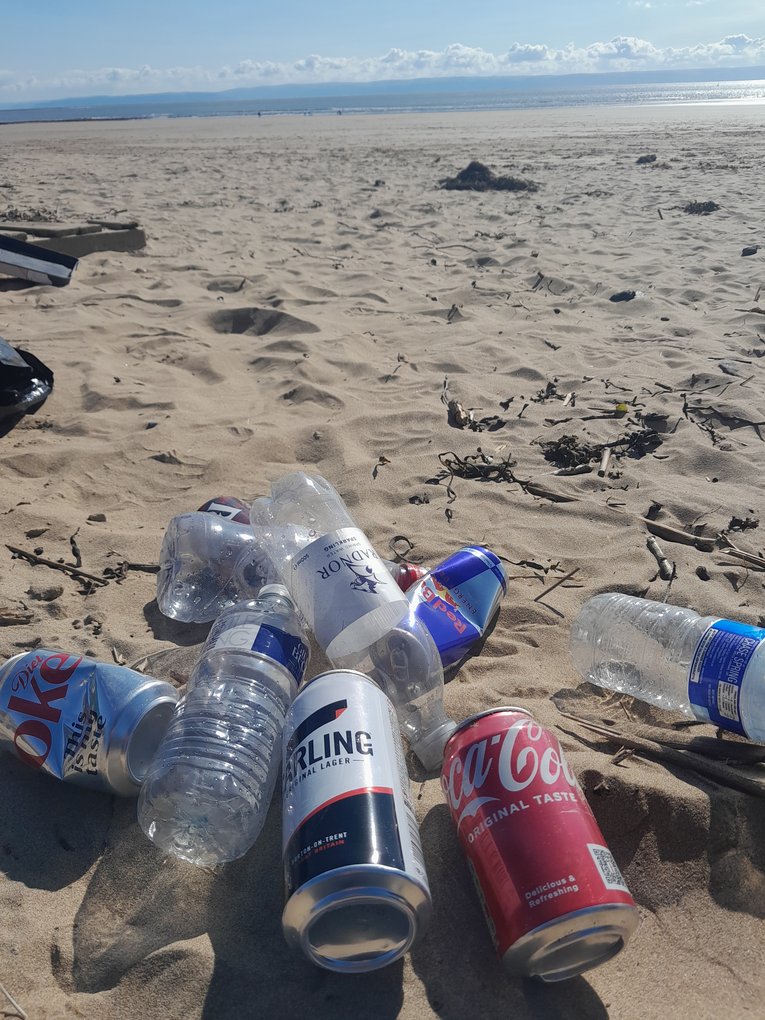
Credit: Lizzie Price
Sewage-related litter
These items include wet wipes, cotton bud sticks and sanitary products that get flushed down the toilet instead of going in the bin.
Following years of campaigning using Beachwatch data, we now have regulations laid in every country of the UK to ban plastic in single-use wet wipes. This is a fantastic success, and we will continue to monitor levels of this type of litter to ensure the bans lead to less wet wipes on our beaches.
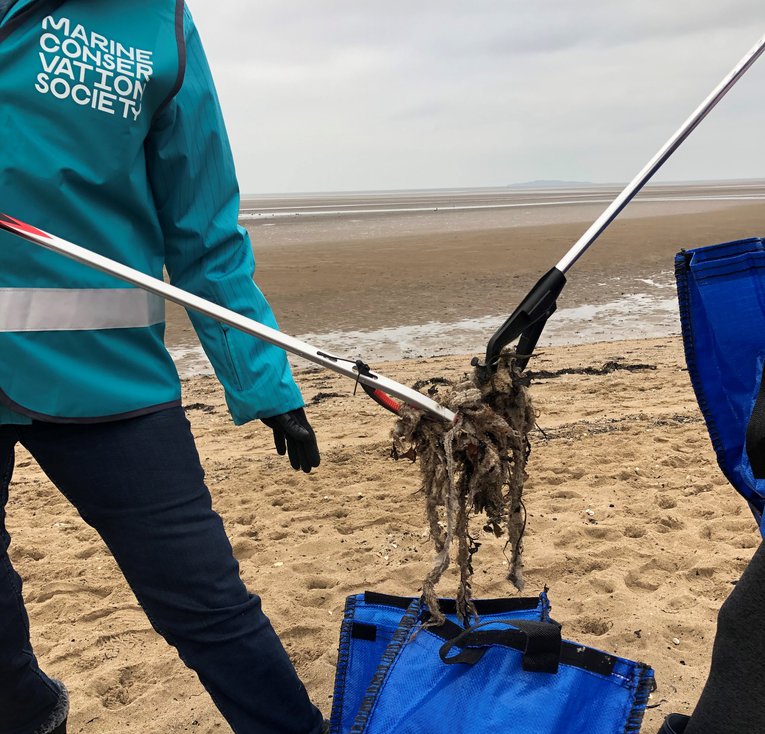
Credit: Kirsty Crawford
We now need further action taken to reduce sewage-related litter on our beaches, including bans on plastic in other single-use items, better labelling, awareness raising, and improvements to our wastewater network.
Fishing-related litter
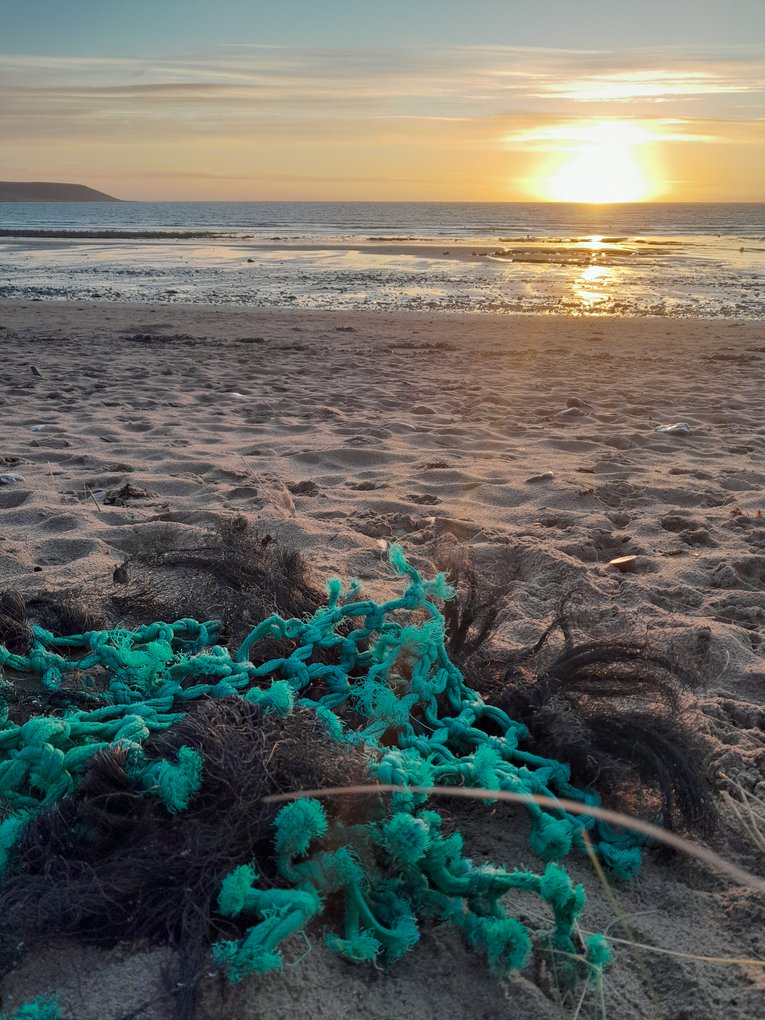
Credit: Lizzie Price
We’re calling on UK governments to ensure that all UK ports and harbours provide free, standardised waste reception facilities with equivalent measures for aquaculture sites and gear. The Recycle Mor and Odyssey projects in Wales are both fantastic examples of the services we would like to see made available.
We also welcome projects such as KIMOs Fishing for Litter project or Salmon Scotland’s pollution hotline service being included in national marine litter strategies, such as the one in Scotland.
Litter around the UK and Channel Islands
As you’ll see below, the litter story varies across the UK and Channel Islands. The types, amounts and sources of marine litter differ in each region, meaning we need to take a targeted approach and campaign for legislation in each Country that addresses and reduces the pollution that affects their marine environments.
Learn more about what we found in each nation and what we’re doing about it
Scotland
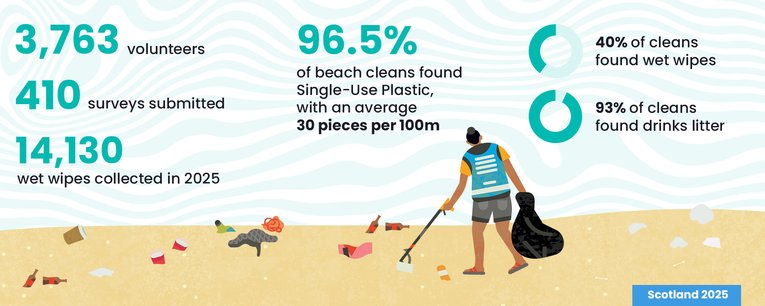
2025 saw 3,763 volunteers conduct 410 beach litter surveys in Scotland, helping us build a better picture of the litter polluting its beaches so we can effectively campaign for change to reduce it.
There was a 23% decrease in litter compared to 2024, with 385,551 litter items picked up on Scottish beaches, equating to an average of 157 items per 100m.
Wet wipes
14,130 wet wipes were picked up in Scotland in 2025 and were found on 40% of beaches surveyed. Wet wipes are still a major problem in certain areas of Scotland, so we were delighted to see the regulations laid in Holyrood to ban plastic in single-use wet wipes in February 2026. We’re continuing to call on the Scottish Government to phase out other single-use plastic sanitary items and provide further support for reusable options.
To help reduce sewage-related litter we have also been calling for better monitoring of Combined Sewer Overflows (CSOs). In 2025, coverage of monitored CSOs increased slightly from 32% to 35%, supported by enhancements to Scottish Water’s near real-time Overflow Map which has built on the progress in 2024. Although we welcome this increase, we need to see 100% of CSOs monitored, with targets to reduce the number of times they discharge into the environment to help reduce sewage-related litter.
As part of our Scottish Manifesto ahead of the Scottish Elections in May, we are calling for the next Scottish Government to make clean water a national priority by introducing a Water Bill within the first 12 months of the next parliamentary session.
Fishing gear and aquaculture equipment
We have been continuing to work closely with the Scottish Islands Federation on monitoring fishing and aquaculture litter, including a new ID guide to help improve the accuracy of Beachwatch data. We have also been trialling a specific form for fishing and aquaculture litter to complement the Beachwatch surveys so we can gather more accurate data on the types of gear washing up across the Scottish Islands.
Since we started working together in 2022, the number of surveys completed by island communities has increased by 166%. The data collected shows that there are differences in the types of litter that island communities face compared to those on the mainland, highlighting the need for policy interventions on the types of litter that affect different locations. In 2025, fishing gear and aquaculture equipment made up 34% of all litter collected on Scottish Islands, compared to only 9% on mainland beaches.
We will continue to use this data to raise awareness of the true impact that marine litter is having on island communities and the need for funding to support further clean-up activity across coastal communities.
We presented these findings at multiple conferences in 2025 and have included calls for action in our Scottish Manifesto for Scottish ports and harbours to provide free, standardised waste reception facilities for fishing gear, with equivalent measures for aquaculture sites and gear.
Circular Economy
Thanks to advocacy, which Beachwatch data supported, the Scottish Parliament passed the Circular Economy Act in 2024 and consulted on a Circular Economy Strategy last year, taking vital steps towards a reusable society and moving away from a single-use and throwaway society.
Although the amount of drinks-related litter recorded on Scotland’s beaches decreased by 29% compared to 2024, with 12 items found per 100m, this type of litter was still found on 93% on beaches surveyed. This highlights the urgent need for the incoming Deposit Return Scheme, which is due to launch in October 2027 in line with other schemes across the UK.
Wales
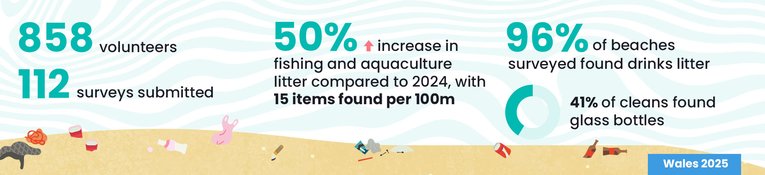
We received 112 surveys in Wales, thanks to 858 volunteers who took part and gave 1,296 hours of their time to clean Welsh beaches and record what they found.
In 2025, we saw a 39% decrease in litter compared to 2024, with 73.5 items found per 100m of beach surveyed.
Drinks-related litter
Although drinks-related litter is still consistently being found on Welsh beaches, with items recorded on 95.5% of surveyed beaches in 2025, we saw a 15% decrease in this type of litter compared to 2024.
Following the exclusion granted through the UK Internal Market Act, we were delighted to see the Welsh Government lay regulations in the Senedd in February for a Welsh DRS that will include plastic, metal, and glass. This will start in October 2027 alongside the other UK nations.
We also welcome the plans to trial reuse with industry and hope to see further materials and refillable options added to all the Deposit Return Schemes across the UK soon.
Single-use plastic
Single-use plastics were found on 97% of beaches surveyed in Wales in 2025, showing the need for further action to tackle this type of plastic.
The Phase Two of single-u se plastic bans have been delayed until after the Senedd Elections in May 2026. We hope the next Welsh Government will introduce this quickly which will include single-use plastic carrier bags and drinks lids as well as oxo-degradable plastics. We hope that these bans will mean we’ll see a decrease in this type of litter in the coming years.
We saw a 17% decrease in cigarette stubs on Welsh beaches compared to 2024. However, we did find this type of litter on 53% of beaches surveyed in 2025. This highlights the need for a ban on single-use plastic filters which we have been calling for, alongside bans on other smoking-related litter items like disposable vapes.
Fishing-related litter
An average of 15 fishing litter items per 100m of beach was found across Wales in 2025. This is a 50% increase from 2024. With projects like Recycle Mor and Odyssey being excellent examples of collection and recycling of end-of-life gear it shows the need to roll similar projects out across Wales.
You can read more about our marine litter asks in Wales in our Manifesto for Welsh Seas.
England
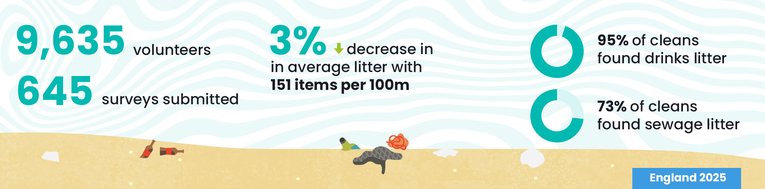
Thank you to the 9,635 volunteers who got involved in beach cleans in 2025. We received 645 litter surveys from across England, providing us with vital data on the most prevalent litter types polluting its beaches.
An average of 151 litter items were found per 100m of beach surveyed in England – a 3% drop from 2024. Although it’s great to see litter levels going down, we want to see further action taken to reduce this further.
Fishing-related litter
There was an average of 12 items of fishing-related litter per 100m of beach surveyed, the same as in 2024. This type of litter was found on 91% of beaches surveyed.
We’re calling on the UK Government to ensure all UK ports and harbours provide free, standardised waste reception facilities with equivalent measures for aquaculture sites and gear.
Sewage-related debris
Sewage-related litter (SRD) saw a 37.5% decrease in England in 2025 compared to 2024, with. these items found on 73% of beaches. Volunteers recorded wet wipes on 60% of beaches surveyed in 2025, removing 3,046 of them.
Although it’s positive to see a decrease of them being found last year this may be due to a dry summer leading to reduced spills from storm overflows. It is, therefore, clear that the ban on plastic in single-use wet wipes is needed and will come into force in England in May 2027. We’re also calling on UK Government to phase out other single-use plastic sanitary items, introduce mandatory ‘Do not Flush’ labelling for all wet wipes and other sanitary products, and support reusable options.
We joined 40 organisations in demanding that the UK Government fixes England’s broken water system, clamping down on polluters to stop sewage pollution which leads to SRD washing up on our shores.
Drinks-related litter
The amount of drinks litter found on England's beaches decrease 12% from 2024, with items recorded on 95% of beaches surveyed in 2025 and an average of 15 found per 100m.
These results reinforce our calls for Deposit Return Schemes for plastic and metal drinks containers to start by the promised date of October 2027. We also want to see a circular solution for glass in place, either through a Deposit Return Scheme or other Extended Producer Responsibility Scheme, and for the schemes to be designed with the ambition of shifting to reuse and refill schemes in the future.
Northern Ireland
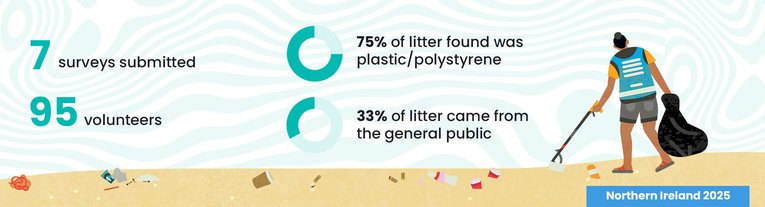
We received seven surveys from Northern Ireland in 2025, thanks to 95 volunteers getting involved. 74% of litter found was made of plastic or polystyrene, and 33% came from the general public.
To draw statistically significant conclusions from the data, we need more of it, and we'd love to grow our volunteer numbers further to paint a true picture of the state of Northern Ireland's beaches.
Channel Islands
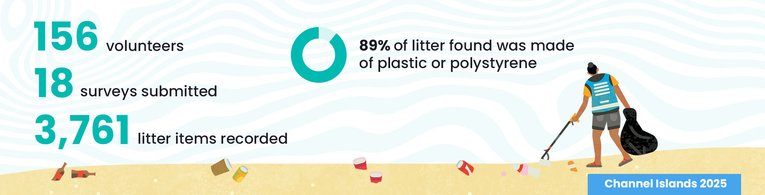
Thank you to everyone who headed to beaches across the Channel Islands to clean up and record the litter they found. We received 18 surveys, with 156 volunteers taking part in 2025. 3,761 litter items were recorded, with 89% of litter found made of plastic or polystyrene.
As with Northern Ireland, we’re currently unable to draw statistical conclusions from the data and are keen to get more volunteers from the Channel Islands involved in our beach cleans and litter surveys.
If you’d like to take part and contribute to our ever-growing dataset, please email beachwatch@mcsuk.org.
Get involved
Share these results with your local politician and ask them what they are doing to help reduce beach litter, or check out more ways below to get involved and help tackle marine pollution.
Join or organise a beach clean
Our beach cleans and litter surveys happen all year round. We have all the resources you need to get started. Check whether there’s one happening near you or organise your own.
Team beach cleans
If you’re looking for a team building or volunteering day for your company, join our experts on a beach clean for a day of fun, whilst doing something worthwhile for the environment. Find out more about team beach cleans.
Source to Sea Litter Quest
In the UK, you‘re never too far from a waterway or sewer, which can carry litter into the ocean and onto our beaches. By taking part in Source to Sea and clearing litter from our streets, you prevent it from polluting our beaches and help build a bigger picture of pollution in UK seas. Find out more about inland litter picks.

Credit: People's Postcode Lottery