
Source to Sea Litter Survey
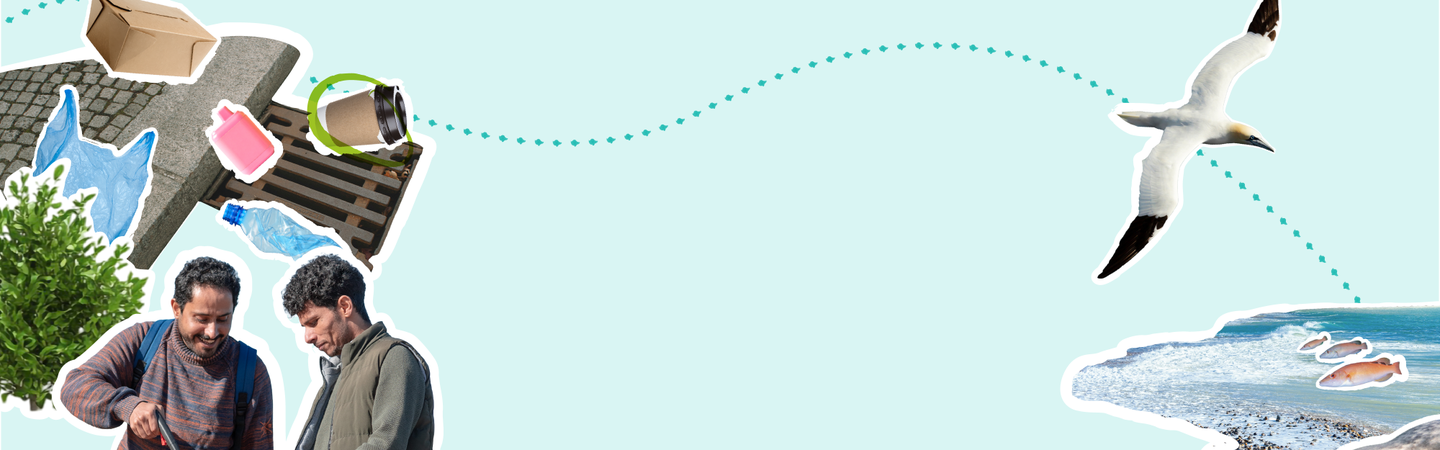
No matter where you live across the UK, you can help keep our seas clean. Most of the litter that ends up on our beaches or in the sea starts its journey in villages, towns and cities miles from the coast.
Source to Sea Litter Survey event
How to take part
Before heading out to conduct your survey, check out our handy risk assessments to help you stay safe. If you are leading a group, we've put together a handy guide to help you run a litter pick.
In order to be covered by our insurance event organisers must make time for appropriate planning, risk assessment and minimisation prior to their event.
Taking part is simple:
- Download and print our Source to Sea Litter Survey form:
- Head to your local park, street or river and record which litter items you spot there - keep a tally of how many you find. If you're taking part with younger children, you can tick the form instead.
- If it's safe to, and the litter is on public land, you can either take the rubbish home with you or arrange uplift of litter with the local council - remember to recycle it wherever possible
- Submit your litter data using our handy form. If you prefer, you can email us a photo or scan of your form to beachwatch@mcsuk.org
- When you've finished your event, if would be great to have any feedback on any hazards to help us improve the safety of litter clean ups. Please complete the section on the form.
What is Source to Sea Litter Survey?
80% of marine litter comes from land-based sources finding its way into streams, rivers or drains and ending up in the ocean, where it causes problems for ecosystems and sea life.

Credit: Billy Barraclough
As part of our inland litter cleans, we use the data you collect to track rubbish back to its source. Your survey results are then used to find solutions to ocean pollution and to campaign for measures to bring positive change.
Taking part is simple and you can conduct a clean at any time of year. You can make a difference wherever you are in the UK.

Why your help matters
All of the data you collect on the beach, on your street or in a local park helps us campaign for change to protect our ocean.
Plastic bag charges
We’ve used data collected in previous years to make the case for carrier bag charges across the UK. Wales introduced charges in 2011 followed by Scotland in 2014 and England in 2015.
We know policies like carrier bag charges work. Since their introduction across the UK, we’ve seen a 61% drop (2011-2021) in the number of plastic bags we’re finding on beaches. The more data we collect, the more policies we can push for to make beach and ocean pollution a thing of the past.

Credit: Rich Carey via Shutterstock
Deposit return schemes
We’ve been campaigning for deposit return schemes across the UK. These schemes mean you pay a small deposit on these items when you buy them, then when you return it to be recycled, you get your money back.
All four nations are due to introduce deposit return schemes by the end of 2027.
Wet wipes
Sometimes it’s hard to understand a single wet wipe can make such a big impact hundreds of miles away. But each year we find evidence of the impact of a single flush on our beaches and in our coastal waters.
Many wet wipes contain plastic fibres which break down into microplastics and become harmful to marine animals. We’ve been calling for UK governments to ban single use plastic wipes and thanks to our campaigning, this ban will come into force across the UK by the end of 2027.
Balloons
Letting balloons go and setting off sky lanterns may seem like a bit of harmless fun, but what happens when they float out of your sight and disappear from your thoughts? They land somewhere – either intact or in bits with their trailing strings and plastic ties.
Councils all around the UK got involved in our Don’t let go campaign and voted to ban outdoor balloon and sky lanterns releases.