Positive ocean news: November '25 edition
Looking for some ocean optimism? Dive into our latest round-up positive ocean news stories and join us in celebrating the wins for our seas.
UK passes legislation banning sale and supply of wet wipes containing plastic
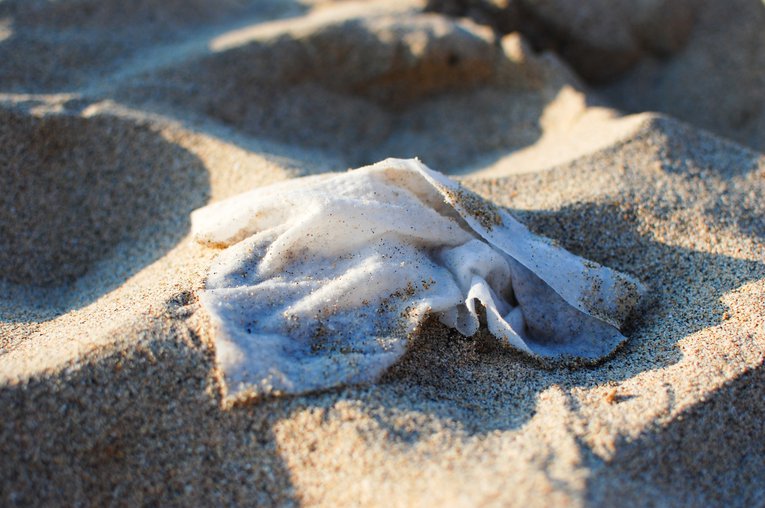
The UK Government has officially passed legislation banning the sale and supply of wet wipes containing plastic, marking a decisive step towards ending one of the most persistent sources of plastic pollution in our waters.
Credit: Natasha Ewins
This is a major milestone in tackling plastic pollution in England’s seas and comes five months after Wales became the first country in the world to pass a ban on plastic in wet wipes. Wales’s ban will come into force on the 18 December 2026, while England’s will begin in May 2027.
Fiona Thomas, Head of Public Affairs at The Marine Conservation Society, said, “Today we celebrate a huge moment for our seas, but our work isn’t done yet. We’re continuing to keep up the pressure on Scottish Government to lay its regulations banning wet wipes and we will keep pushing the UK Government for clearer labelling and a stronger definition of plastic, so we can tackle this type of pollution for good.”
Read more here
Anemone that builds home for hermit crabs discovered
Credit: Akihiro Yoshikawa
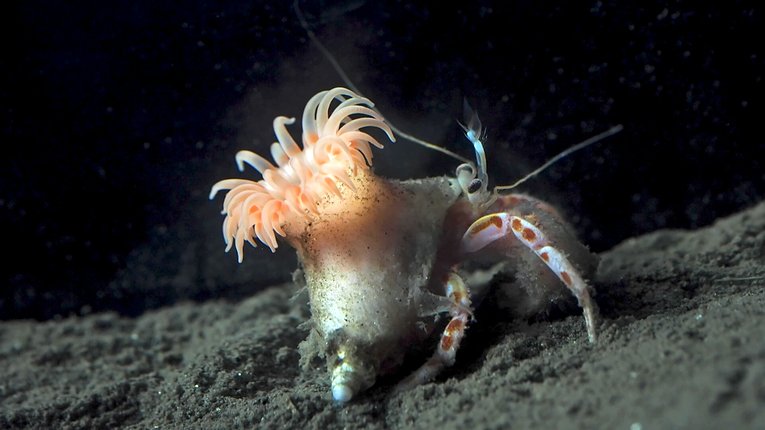
A new species of deep-sea anemone has been discovered off Japan’s Pacific coast, living on the shells of hermit crabs.
There, they live in a mutually beneficial relationship: the anemone secretes a shell-like structure to reinforce and expand the crabs’ shells – allowing them to grow larger – while it feeds off organic particles in return.
As well as revealing a new species and a fascinating partnership, Akihiro Yoshikawa, Associate Professor of Kumamoto University's Aitsu Marine Station, who led the study, said, that it highlights how even simple creatures, like anemones, can evolve to develop sophisticated behaviours. "Their ability to build a shell-like structure is a fascinating clue to understanding how animals perceive space and direction."
Read more on Phys.org
Charity reports high survival rate of transplanted seagrass
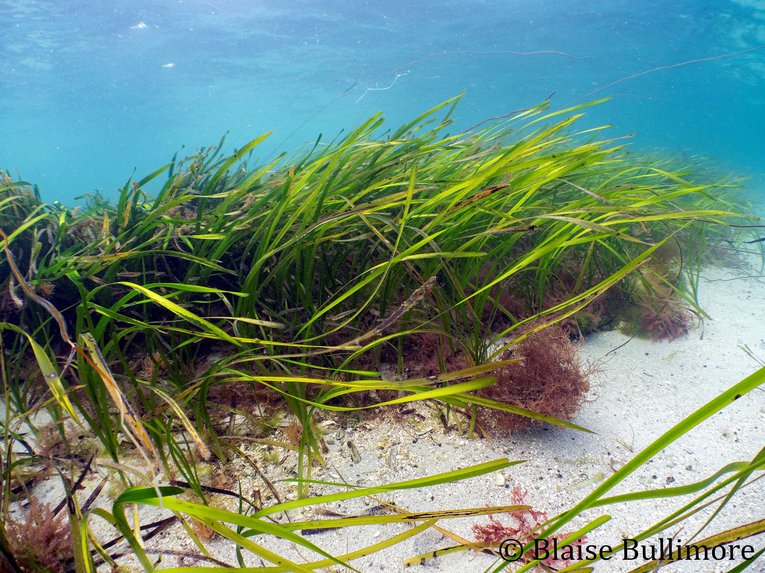
Seawilding, Scotland’s first community-based marine habitat restoration charity, has reported great success in its seagrass transplanting efforts.
Credit: Blaise Bullimore
The results for transplanted shoots have been equally positive, with a new trial in 2025 achieving a 97% survival rate of transplanted shoots, leading to seagrass coverage increasing by four times in just six months.
The results mark a significant step forward in seagrass restoration efforts, with the developed methodology showing that the key species can be restored successfully and at scale.
Read more on the Eco magazine website
‘Death-ball’ sponge among species discovered in one the world’s most remote areas
Credit: The Nippon Foundation-Nekton Ocean Census, Schmidt Ocean Institute © 2025
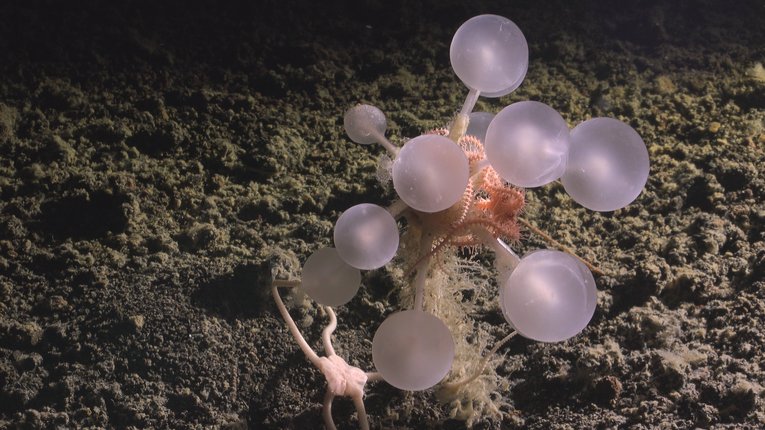
Expeditions in the Southern Ocean by The Nippon Foundation–Nekton Ocean Census and Schmidt Ocean Institute have revealed 30 new species, as well as thousands of images and videos of the fascinating marine life found in the ocean’s depths.
Among the discoveries is the ‘death-ball sponge’, whose spherical form is covered in tiny hooks to trap prey, armoured and iridescent scale worms, a new species of sea star, crustaceans, rare gastropods and potential new black coral and sea-pen species.
Mr Mitsuyuki Unno, Executive Director of The Nippon Foundation, who leads Ocean Census with the Nekton Foundation, said, “Accelerating species discovery is not a scientific luxury, it is essential for public good… Through [Ocean Census] expeditions, we have seen another ground-breaking species discovery that benefits the world’s scientists, policymakers and communities.”
Read more on the Good News Network website
Footage shows restored native oyster reefs thriving in the Solent

Credit: David George
In a collaboration between the Solent Seascape Project, led by the Blue Marine Foundation, and the Royal Navy’s Diving & Threat Exploitation Group, a Remote Operated Vehicle captured footage of the football-pitch-size reef which is home to around 30,000 native oysters.
As well as showing how the reef is flourishing, with sponges, a spider crab, and a range of fish species recorded, the footage highlights the stark contrast of unrestored areas, which appeared somewhat barren in comparison.
Dr Luke Helmer, Restoration Science Manager at Blue Marine Foundation, said, “It was a wonderful surprise to see how quickly the reef community has flourished… It really highlights how important this habitat is – and how much we need it back.”
Read more on the Oceanographic website
Scientists develop seedbox to help restore Great Barrier Reef
In a breakthrough in coral restoration efforts, scientists in Australia have developed larval seedboxes that improve coral larvae’s chance of survival.
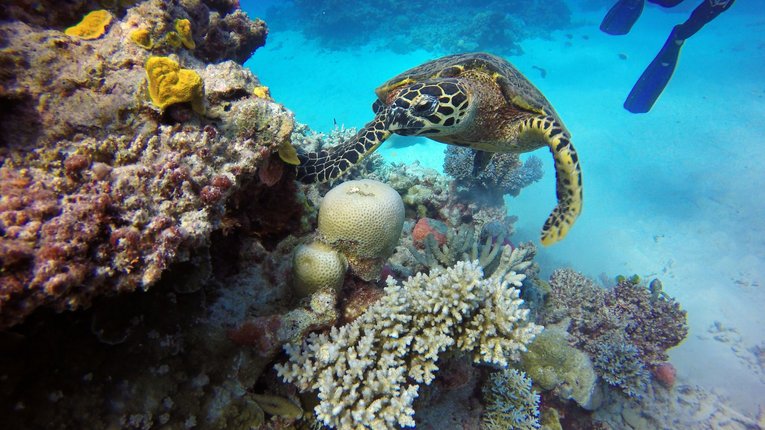
Credit: Chad Taylor
Settlement rates were found to be up to 56 times higher compared to other methods, offering hope for the restoration of the Great Barrier Reef. The researchers will now conduct a trial to establish how well the seedboxes work across different environmental conditions, such as areas affected by extreme weather and bleaching.
If successful, this new technique could offer the solution for large-scale, climate-resilient coral restoration – throughout the Great Barrier Reef and further afield.
Read more on the Phys.org website
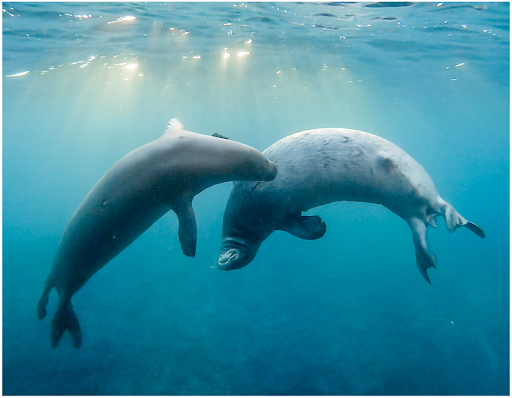
Research sheds light on Hawaiian monk seals’ communication and how ocean noise may impact them
Credit: Krista Jaspers
A new study by the University of Hawai’i has provided insight into how Hawaiian monk seals communicate underwater, revealing that the species produces 25 distinct calls – four times more than previously thought.
The insights provide a glimpse into the seals’ acoustic world and how sound – including the increasing amount of human-generated ocean noise – impacts their daily life. After monitoring more than 4,500 hours of recordings, the research team identified 23,000 calls, including one associated with foraging, which is only the second known case of this in a seal species.
They also observed a ‘combination call’ which links distinct calls together – a complexity which has never been recorded for a seal, sea lion or walrus species before, suggesting their communication is more sophisticated than was thought possible.
Professor Lars Bejder, Director of MMRP and co-author of the study, said, “Every call we record brings us closer to understanding – and protecting – the last remaining voices of Hawai‘i’s monk seals,”
Read more on the Oceanographic website
Brazil to sustainably manage all its waters by 2030
With a commitment to sustainably manage all 3.68km2 of its waters, Brazil’s announcement at COP30 makes it one of the world’s most ambitious ocean stewards.

Credit: Tom Wheatley
The country, which hosted COP30, also joined the High Level Panel for a Sustainable Ocean Economy (Ocean Panel), which aims to build a sustainable blue economy to help achieve a better and more resilient future for people and the planet.
Ten other nations also announced commitments to sustainably manage all their waters: Panama, the Republic of Korea, Angola, Benin, Cameroon, Republic of Congo, Côte d’Ivoire, Equatorial Guinea, Liberia and Nigeria.
Read more on the Oceanographic website
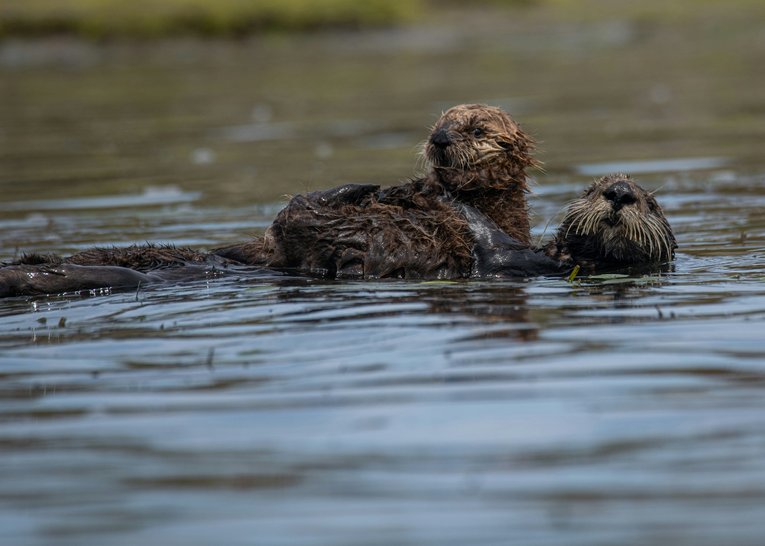
Lost sea otter pup reunited with mother in California
Credit: Mana5280
After receiving reports of an animal frantically crying in Morro Bay, California, the Marine Mammal Center set out in search of a distressed otter pup, whose cries sound similar to a human baby’s.
The team located the pup, named Caterpillar, whose mother was nowhere to be seen. To find her and reunite the pair, they recorded Caterpillar’s cries and played it through a speaker while they patrolled the water.
Over two hours later, a female otter surfaced the water and began following the boat – something they rarely do. Confident that this was the pup’s mother, a team member entered the water and gently released Caterpillar. The female otter swam over, grabbed the pup, smelled it (to check it was hers) and the pair then safely swam off together.
Read more on the Good News Network website