
Positive ocean news: March ’26 edition
From species discoveries and habitat recovery to a reduction in marine litter and the world's largest coastal path, March brought some great wins for the ocean and its inhabitants.
15% drop in litter on UK and Channel Island beaches
The average amount of litter items found per 100m on UK and Channel Islands’ beaches has dropped by 15% compared to 2024, the Marine Conservation Society has found.

Volunteer beach cleaners during the Great British Beach Clean
Credit: Andrew Brown
A total of 11.4 tonnes of litter was removed, keeping beaches cleaner and safer for people and wildlife, which can ingest or become entangled in debris. The data collected by volunteers will also feed into the Marine Conservation Society’s long-running marine litter dataset, which is used to inform policy recommendations and campaign efforts to reduce and prevent litter reaching the UK’s seas and beaches in the first place.
Read more here
Signs of recovery following Sussex bottom trawling ban
Five years after the introduction of a ban on bottom trawling, a destructive fishing practice which damages marine habitats, the Sussex coast is showing the first ripples of recovery.

Credit: Matt Barnes
The impact of this ban is starting to show: important nursery grounds are beginning to stabilise, and Black Sea Bream numbers are growing, and mussel beds are re-establishing themselves along the coast. Fishers are also noticing more widely distributed shoals and more bass.
These are encouraging signs which offer hope for further regeneration of vital marine habitats, in Sussex and beyond.
Read more on the Sussex Express website
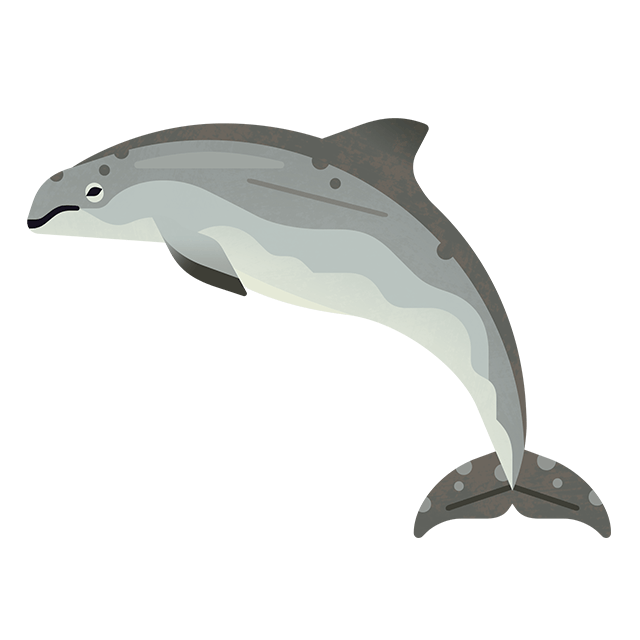
Rare harbour porpoise mating behaviour captured on film

A group of harbour porpoises swimming in the sea
Credit: Richard Shucksmith / scotlandbigpicture.com
Researchers have made a breakthrough in marine biology, capturing previously unseen social behaviour and mating dynamics of harbour porpoises.
The footage, captured off Shetland’s waters, shows porpoises gathering in groups much larger than expected; although they tend to be recorded in twos or threes, the researchers recorded up to 26 porpoises together. This suggests their social structures are much more complex than previously believed and provides insights into when, where, and how they congregate.
It forms part of a study documenting harbour porpoise mating behaviour in UK waters, and offers the most comprehensive account to date, which may inform conservation efforts and mitigate risks for these elusive creatures.
Read more on the Scienmag website
Endangered puffins return to breeding grounds

An Atlantic puffin burrowing in a cliff
Credit: Kevin Morgans
Dozens of puffins have returned to East Yorkshire’s chalk cliffs, which are home to the UK’s largest mainland seabird colony.
The birds will continue to arrive in the coming months, with pairs laying one egg, and will remain until July to raise their chick. The puffins will then leave to spend Winter in the eastern North Atlantic and North Sea.
Puffins are currently on the red list of endangered species, facing threats such as overfishing, climate change and avian (bird) flu. Thanks to efforts to end industrial sandeel fishing – a key food source for puffins – there is hope for population recovery.
Senior reserve manager Dave O'Hara, said, “…we now have an opportunity to turn the tide”, with Katie-Jo Luxton, the RSPB's director for conservation, adding that we “cannot take the arrival of puffins and other seabirds back to our shores for granted.”
Read more on the BBC News website
New coastal path to run along entire English coast
Once completed, the King Charles III England Coast Path will stretch over 2,700 miles around England’s coast, making it the longest of its kind in the world.
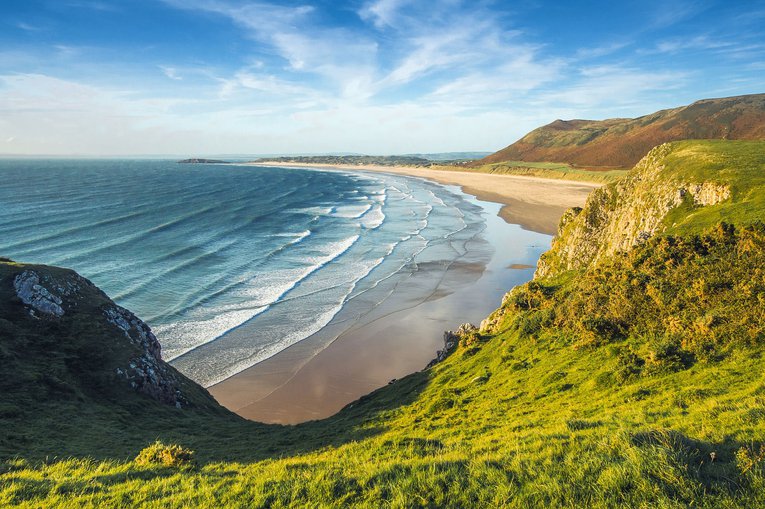
Credit: Image by diego_torres from Pixabay
The path will feature a ‘coastal margin’ – the area of land between the path and the sea, such as beaches and cliffs – visitors can use, including areas which the public were previously not allowed access to. Almost all of the path is already open for use, with only 634 miles yet to be completed.
Read more on the Independent website
Never-before-seen creatures recorded off Caribbean UK Overseas Territories
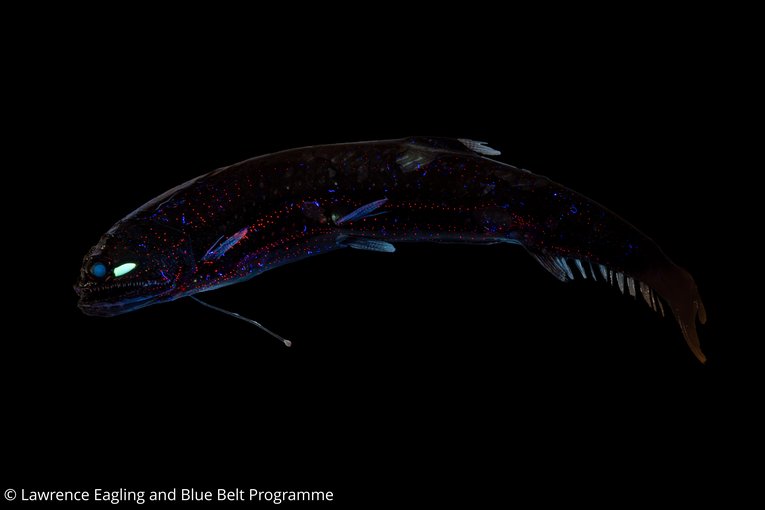
A glowing dragonfish recorded in the expedition
Credit: Laurence Eagling and Blue Belt Programme
An expedition around the Cayman Islands, Anguilla and Turks and Caicos has revealed 290 types of marine creatures, including pelican eel with a glowing pink tail, a dragonfish with a glowing rod under its chin, and a swimming cucumber yet to be identified.
Also discovered were an underwater mountain range, a massive sinkhole, healthy coral reefs, as yet unaffected by stoney coral disease found elsewhere in the region, and black coral which may be thousands of years old.
These waters, and the marine life in them, have long been a mystery. These findings will be used to improve biodiversity management plans for the islands and can help inform the potential designation of Marine Protected Areas to fulfil the UK’s ’30 by 30’ commitments.
Read more on the BBC News website
Known biodiversity in Japan’s Nankai Trough five times higher than believed
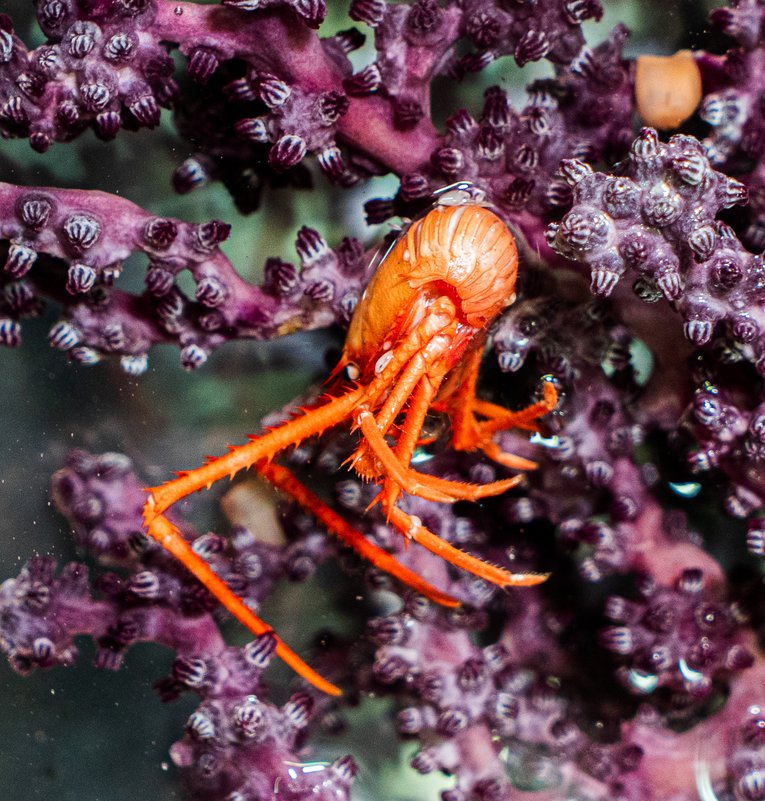
Credit: The Nippon Foundation-Nekton Ocean Census_©JAMSTEC
An expedition in one of Japan’s most understudied deep-sea environments identified 80 animal species – over five times more than the 14 previously recorded. The findings highlight the richness of the Nankai Trough’s biodiversity and furthers our understanding of deep-sea habitats and species.
Molluscs, such as snails and clams, lugworms, crabs and shrimp, ribbon worms, sea stars, brittle stars, sea cucumbers and anemones are just some of the creatures discovered in the area’s cold seep habitats.
The expedition, led by The Nippon Foundation-Nekton Ocean Census in partnership with the Japan Agency for Marine-Earth Science and Technology (JAMSTEC), also explored Japan’s Shichiyo Seamount Chain, confirming 38 new species and identifying a further 28 potential new species across the two areas.
Mitsuyuki Unno, Executive Director of The Nippon Foundation, said, “Each new species discovery is a step toward understanding, valuing, and ultimately safeguarding our shared ocean.”
Read more on the Oceanographic website
84 tonnes of fishing gear removed from the Pacific Ocean Garbage Patch
The Bounty Project, run by Hawaiʻi Pacific University, has removed 84 tonnes of derelict fishing gear from the world’s largest collection of marine debris.

Credit: Rich Carey | Shutterstock
In three years, 77 fishers have got involved, with the compensation resulting in friendly competition – encouraging even greater removals – and providing an extra source of income. One tonne of the recovered gear was recycled in a pavement project called ‘Nets-to-Roads’.
Read more on the Good News Network website