Positive ocean news: February ’26 edition
Feel inspired by the latest ocean wins, from species discoveries and conservation to legislation that protects our seas and prevents pollution.
UK High Seas Treaty receives Royal Assent
The Biodiversity Beyond National Jurisdiction Agreement, also known as the High Seas Treaty, is one step closer to receiving UK ratification.
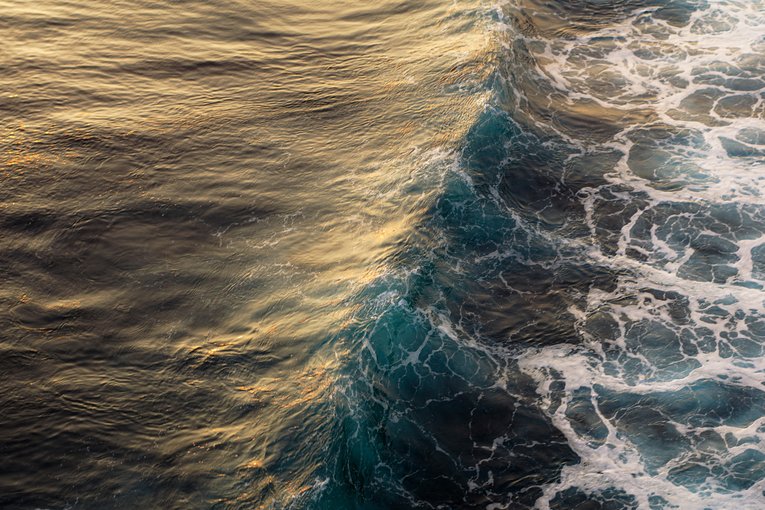
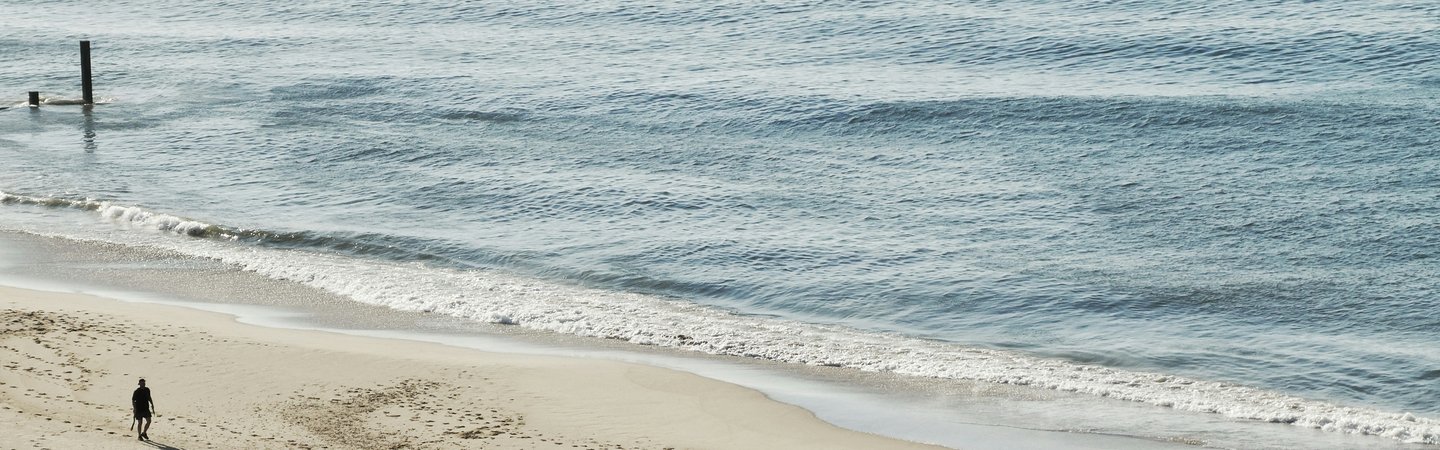
Ocean waves at sunset
Credit: Abdi Rahman H
Once the UK Government has passed two Statutory Instruments and 'deposited' the Agreement with the UN, which it must do by the end of June, the UK will become part of the global Treaty, protecting waters beyond the UK and its Overseas Territories.
Read more on the Royal Gazette website
Six new comb jellyfish species recorded in Columbia

A comb jelly
Credit: Mark Kirkland
Through a Pristine Seas expedition, researchers in Colombia have gathered the most comprehensive account of the country's ctenophore fauna, documenting 15 distinct forms – species, genus or morphospecies.
Six species were recorded in Colombia for the first time, filling a historical gap in knowledge about the diversity and distribution of comb jellyfish around Colombia.
Despite belonging to one of the oldest known animal lineages, the fragile nature of comb jellyfish means they’re difficult to catalogue – they must be studied in their environment through photography. The lead author says that the results of this study demonstrate the value of non-invasive research methods to strengthen knowledge of marine biodiversity.
Read more on the Oceanographic website
Scotland bans plastic in wet wipes
From August 11, 2027, the sale and supply of wet wipes containing plastic will be banned in Scotland in a move to protect the country’s environment and marine waters. Similar bans will come into effect in the other UK nations from December 2026 in Wales and May 2027 in England and Northern Ireland.

Wet wipes found on a Scottish beach
Credit: Catherine Gemmell
Catherine Gemmell, Policy and Advocacy Manager at the Marine Conservation Society, said, “[This is] a vital step towards reducing sewage-related rubbish on our beaches. Our volunteers have consistently found huge numbers of wet wipes along Scotland’s coastline, with some beaches recording thousands. We must move to reusable options, mandatory disposal labelling on bathroom products, and ensure everyone only flushes the three Ps: pee, poo and paper.”
Read more on the STV website
First genetic map of sea cucumber marks step forward in conservation
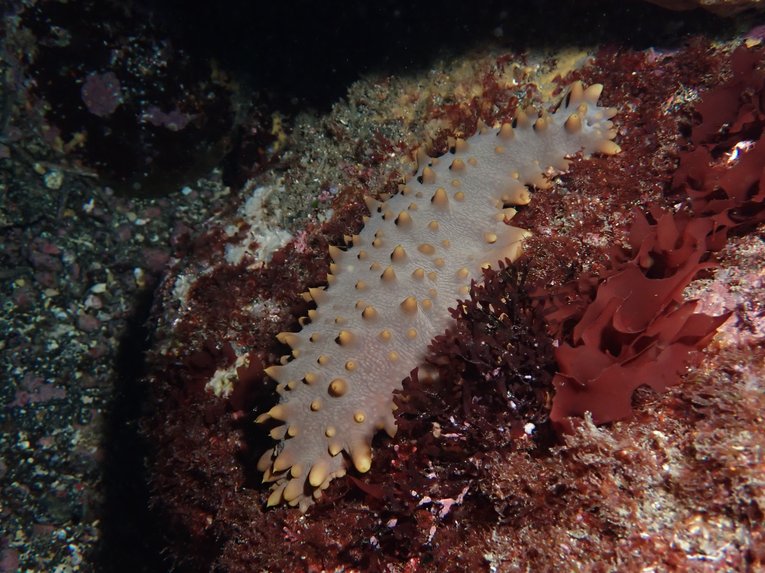
A sea cucumber
Credit: Billy Bensted-Smith
For the first time ever, scientists have completed a full genetic map of an endangered sea cucumber, providing crucial knowledge to help protect and conserve the species in a rapidly changing ocean.
Sea cucumbers play an important role in marine ecosystems, and particularly in the Galapágos, where the study took place. They recycle nutrients on the seafloor, stabilise sediments and protect coral reefs – many of which are at risk from ocean acidification.
Although there are more than 1,800 sea cucumber species known globally, only eight have complete genome maps. The recently completed genome gives a detailed picture of how brown cucumbers (Isostichopus fuscus) function at a molecular level, allowing scientists to track diversity in populations, detect early signs of stress linked to overfishing or climate change, and identify populations that may be at risk.
Read more on the Charles Darwin Foundation website
Rare deep-sea jellyfish spotted off Argentina
While exploring Argentina’s biodiversity, scientists have recorded a rare phantom jellyfish – a species that can grow up to 10 metres long. Rather than stinging tentacles, the Stygiomedusa gigantea has four arms that it uses to catch prey such as fish and plankton.
The species has only been recorded around 120 times since first identified in 1899 and is known to prefer the ocean’s ‘midnight zone’ at depths of 1,000-4,000 metres below the surface. This phantom jellyfish, however, was spotted just 250 metres deep.
As well as the remarkable sightings, the team also recorded the largest known Bathelia candida coral reef on the planet, and discovered 28 potential new species, including corals, sea urchins, and sea anemones.
Read more on the Smithsonian magazine website
First successful coral spawning event in Seychelles lab
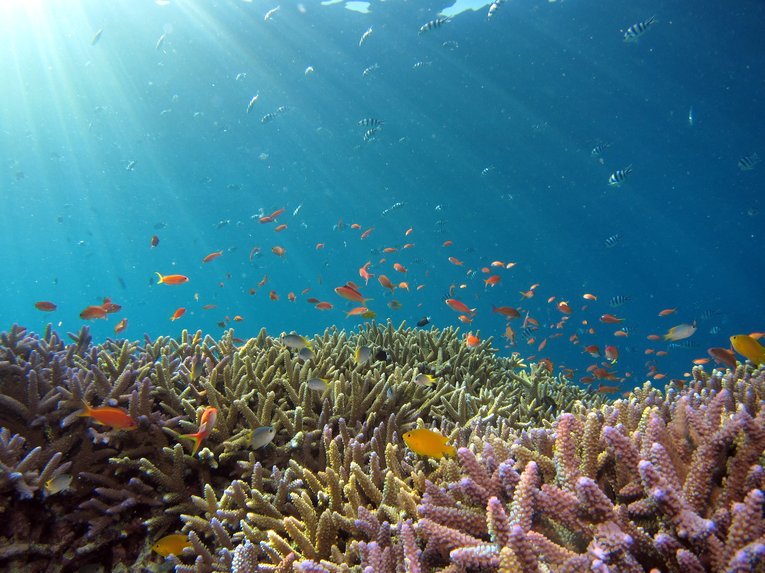
A coral reef surrounded by small fish
Credit: Hiroko Yoshii
Part of Nature Seychelles’ Assisted Recovery of Corals (ARC) programme, the lab has produced around 800,000 coral embryos from 14 parent colonies since November 2025. So far, roughly 65,000 juvenile corals have successfully settled.
It aims to create genetically diverse coral and enhance their thermal resilience, something which is increasingly important as they face growing pressure from bleaching events as a result of climate change.
Dr. Nirmal Shah, CEO of Nature Seychelles, said the lab has “changed what is possible for coral restoration in the Seychelles.” She added, “Since November 2025, we have seen coral offspring not only survive, but settle, grow, and cross the most fragile thresholds of early life, turning a moment of spawning into a pipeline of living, growing reef builders.”
Read more on the Oceanographic website
Loggerhead turtle makes encouraging progress at rescue centre
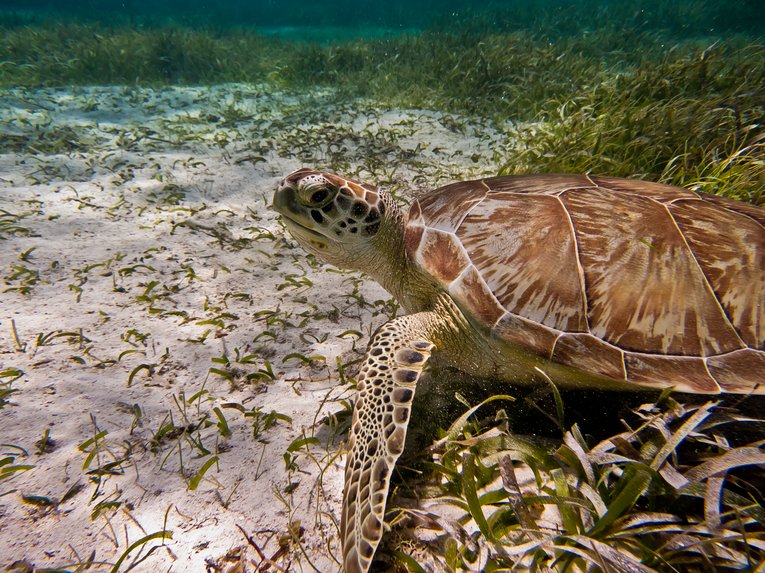
A loggerhead turtle swimming in Belize
Credit: Tom Shelley
Nicknamed Crush, the female loggerhead turtle rescued from Jersey has been released from the quarantine tank as she embarks on the next stage of rehabilitation.
Found washed up and thought to be dead – she was cold-stunned, meaning her body had started to shut down – Crush was cared for in Jersey before being taken to Weymouth Sea Life, where she is making great recovery.
She will soon be reintroduced to other loggerhead turtles, and once fully recovered, will be released back into warmer waters.
Read more on the BBC News website