Policy update round-up: February ‘26
From water White Papers to plans for PFAS, it’s been a busy month for policy updates across the UK. Here, we break down the top announcements and what they mean for our seas.
High Seas Treaty
The High Seas Treaty came into force on the 17th of January. This means that, for the first time ever, countries across the globe can come together to protect the high seas by regulating activities and establishing Marine Protected Areas. However, the UK did not ratify the treaty in time to be part of this global win.

Credit: Jakob Owens
Water Reform
The UK Government published its long‑awaited Water Reform White Paper, outlining plans to improve England’s water sector, for consumers and the environment. Key proposals include creating a new Water Regulator, a greater focus on preventing pollution, and introducing an “ambitious” new target for the water environment. Legislation to deliver parts of the reform package is expected early this year, and we are watching this closely and actively campaigning as part of a wider consortium of EnGOs to ensure the changes support healthier seas.
Environmental Improvement Plan
In December, the UK Government revised the Environmental Improvement Plan (EIP), its five‑year roadmap for restoring and protecting England’s nature. The updated plan weakens key targets for Marine Protected Areas and offers little detail on how wider marine nature goals will be met. In light of this, we will continue pushing for a clear and time-bound plan to protect and enhance our marine natural environment.
Sewage pollution

Credit: Andrei Metelev/Shutterstock
Introduced under the Water (Special Measures) Act, this new duty is a big win for healthier seas.
The welfare of farmed fish and decapods
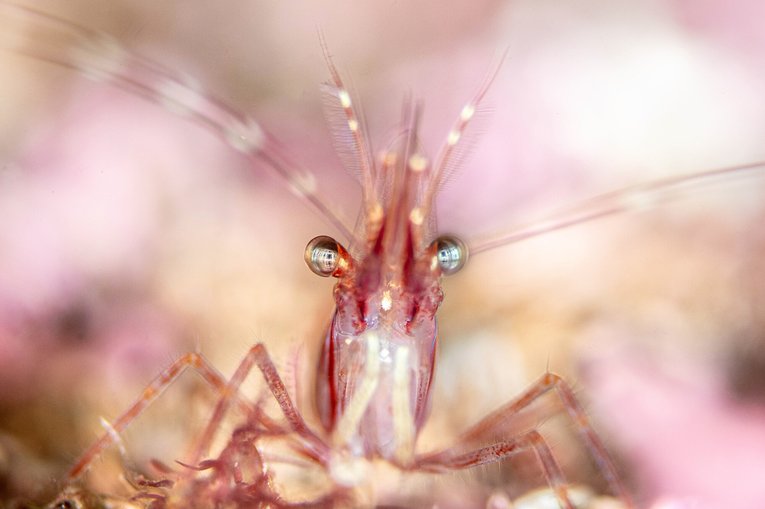
Credit: Cathy Lewis
The UK Government has outlined plans to improve the welfare of marine wildlife in a new Animal Welfare Strategy. This includes building an evidence base of how live decapods (crustaceans including crabs, lobsters, shrimp and prawns) move through the supply chain to look at how their welfare can be guaranteed at critical stages, as well as publishing guidance clarifying that live boiling is not an acceptable killing method. It has also committed to consult on requirements for the humane slaughter of farmed fish; we welcome this and look forward to inputting into the consultation.
Natural Environment (Scotland) Bill
This long-awaited and important piece of legislation was passed in the Scottish Parliament this month. The Bill will introduce nature recovery targets for species and habitats across Scotland, including in the marine environment – something we warmly welcome.
We worked constructively to provide feedback on how it could be improved as it progressed through Parliament and were delighted that Sarah Boyack MSP raised several amendments to the Bill on our behalf, allowing important issues to be raised during the debate. The Scottish Government agreed to support one of these amendments, and with the vast majority of MSPs voting for this Bill in its final stage, we hope this is a sign that protecting the natural environment will be front and centre of the Scottish Parliament’s priorities in the coming years.
PFAS Plan

Credit: Thomas Dutour
It covers three main issues: understanding PFAS sources, tackling PFAS pathways and reducing ongoing exposure to PFAS.
We are pleased to see the Plan published – we have been waiting and campaigning for something like for years – and to see the Government’s commitment to tackle PFAS. We support its framing and broad scope, and would like to see this used as a framework to introduce more restrictions on PFAS and ultimately, a universal restriction similar to the EU's.