
Everyday ocean heroes: The power of community action
The ocean is facing pressures unlike anything seen before. Pollution, habitat loss, and the decline of vital species such as the native oyster are pushing marine ecosystems to the brink.
Yet recovery is possible. Behind every restored reef and revitalised coastline are dedicated people working tirelessly to bring balance back to our seas.
One of those people is Ciara Taylor, our Community Engagement Manager. Through their work in ocean literacy and community-led conservation, Ciara demonstrates just how transformative collective action can be for life beneath the waves.
Below, Ciara shares their journey into marine conservation and explains how collaboration is helping regenerate one of the ocean’s most important hero species: the native oyster.

Ciara engaging with volunteers as part of HYYM.
Credit: Yoke Creative
A pathway into marine conservation
Like many working in this field, Ciara didn’t follow a traditional route into marine conservation. With an early passion for understanding people, they studied philosophy with a focus on politics and ethics. Their career began in gender policy and social research until a realisation shifted everything.
Given the ocean covers 71% of this planet, I thought what better way to protect the Earth and all life on it than by protecting the ocean.
Shortly after joining the organisation, Ciara took the lead on the HYYM project, before stepping into their current role as Community Engagement Manager.
My work is all about supporting people to grow their ocean literacy and to ensure that communities have opportunities to be actively involved in protecting and restoring our ocean.
What a week in Community Engagement looks like
No two weeks look the same for Ciara. They currently support ocean literacy, working with groups across Wales, Scotland and England, helping to shape and deliver national ocean literacy strategies. This work empowers people to understand how the ocean influences their lives and how their actions, in turn, can affect the ocean. By fostering these insights, Ciara’s work is vital for enabling coastal communities to take ownership of their role in marine recovery.
Ciara is also involved with Natur am Byth! Môr, the marine arm of Wales’s largest natural heritage and outreach programme, led by Natural Resources Wales. Working with partners such as Pembrokeshire Marine Special Area of Conservation, the team is restoring native oysters and improving water quality in Welsh waters.
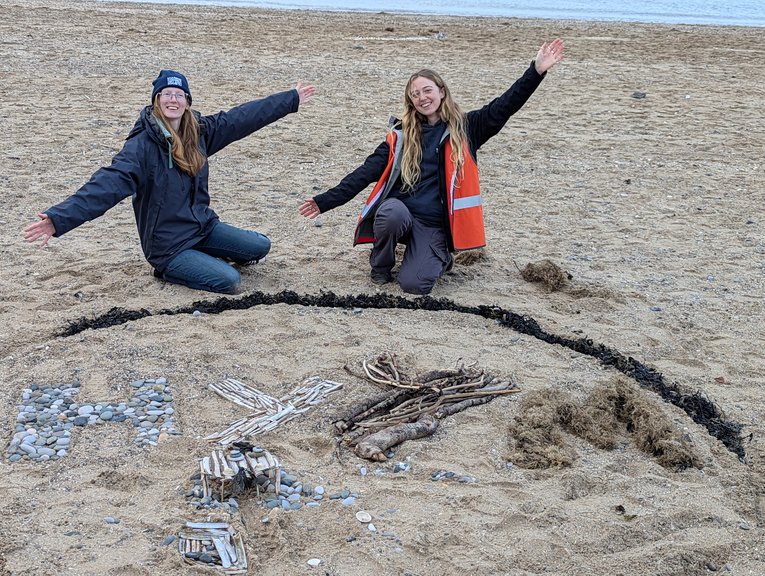
HYYM youth engagement event.
Credit: Hiraeth Y Yn Môr
Why Native Oyster Reefs Matter
A native oyster reef has a multitude of benefits – it could act as a breakwater therefore reducing risk of coastal flooding; act as a fish nursery meaning it could improve fish stocks for local fishers; and improve water quality. By getting involved in restoring oysters, people can build an emotional or experiential connection with their local environment.
But the benefits extend beyond ecology. Oyster restoration helps people reconnect with their local environment in a hands-on, meaningful way. Ciara has seen how this involvement fosters a shared sense of responsibility for the health of our seas.
The Role of community in ocean recovery
For Ciara, marine conservation begins with people.
Their work focuses on raising awareness, inspiring action, and helping communities understand their connection to the ocean. By nurturing this understanding, Ciara hopes to spark the behaviour changes needed to protect marine ecosystems long-term.
The UN Ocean Decade Challenge 10 paper states: the challenge we face is not how to manage the ocean, but how to manage ourselves.

Ciara Taylor and Ffion Mitchell (centre) at EMSEA conference as part of HYYM project.
Credit: EMSEA conference delegate, 2024
One of Ciara's favourite moments in the field
Ciara warmly recalls a standout moment at Horton’s Nose Nature Reserve where volunteers worked to actively support the sand dune system by transplanting marram grass, and their enthusiasm (and creativity) left a lasting impression.

MCS staff and volunteers at Horton’s Nose Nature Reserve.
Credit: Ciara Taylor, 2024
"I loved seeing how stuck in the volunteers got and couldn’t believe how much we did in a day!".
Moments like these highlight the power of community action; ordinary people coming together to create extraordinary impact.
Why support oyster restoration?
Ciara’s message to anyone considering supporting this work is simple. "I can assure you that by supporting our oyster restoration work you are making a truly tangible difference to people, nature, and planet. Oysters are one of nature’s superheroes – they build habitats for other creatures, they improve water quality, they sustain jobs and livelihoods, and they improve our health and wellbeing through all of these things."
When you support ocean conservation and regeneration, you’re not just helping grow baby oysters. You’re empowering people like Ciara to continue their vital work rebuilding marine habitats and restoring the health of our seas.