A century of Sir David Attenborough - Charting the rise of marine conservation

As we celebrate the 100th birthday of one of the most influential conservation advocates of our lifetime, I reflect on how Sir David Attenborough’s journey as a broadcaster, writer, and naturalist, mirrors the evolution of marine conservation itself.
Concern for our ocean has increased significantly since the late 20th and early 21st century, a change in which Sir Attenborough’s own work has undoubtedly played a key role. But with political, economic, social and environmental issues all competing for attention, how do we as changemakers keep the ocean at the forefront of people’s minds over the next century?
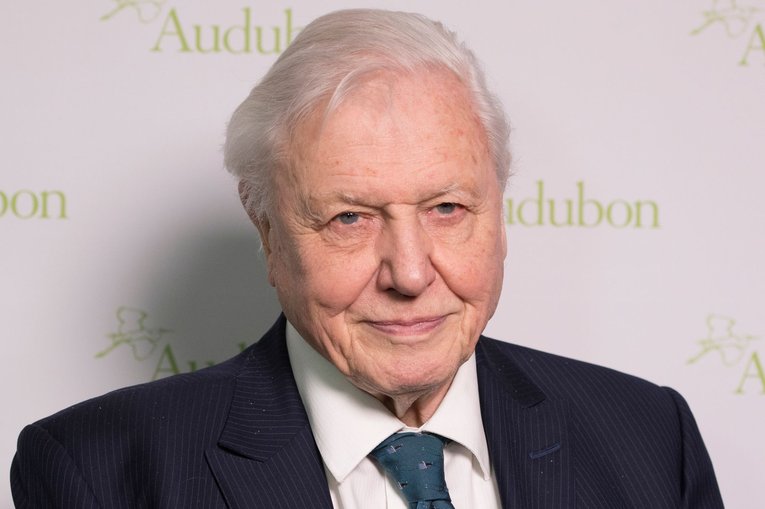
Reflecting on Attenborough’s early career
Credit: Lev Radin
His first on-screen appearance was the 1954 BBC programme Zoo Quest, which involved capturing exotic animals to bring back for exhibition in London Zoo. This is a practice that would be considered highly unethical today, but at the time was legal and reflected societal norms. In the 1950s and 60s, wildlife filmmaking often relied on these more outdated approaches, with animals often trapped or hunted for study and display. Fast forward to now, and it is difficult to imagine such methods being used or considered acceptable, highlighting how dramatically approaches towards wildlife conservation and filmmaking have transformed. Attenborough’s own work has evolved alongside these changing values, reflecting how conservation messaging must adapt to cultural shifts.
The rise of the ocean
The ocean became central to Attenborough’s storytelling in the new millennium with Blue Planet in 2001. More recently, Blue Planet II in 2017 and Ocean in 2025 his work has highlighted key concerns such as plastic pollution, overfishing and the urgent need for properly enforced Marine Protected Areas – issues which, as we know from our own work, remain crucial for protecting the ocean for future generations.
To understand the impact his voice has had on our ocean, we can look to key moments throughout his career and their ripple effects on marine conservation – effects we have felt at the Marine Conservation Society. The timeline below includes defining moments and their wider impact, from Blue Planet to the broader shift in public awareness – showing how, when a zoologist turned his gaze to the ocean, the trajectory of marine conservation changed forever.
Building on his legacy
Throughout his career, Attenborough has shown time and time again that conservation can work. His films spark awareness and ignite public engagement – something we saw first-hand, with beach clean sign-ups the year after Blue Planet II. It is important to acknowledge that Attenborough has a unique ability to make marine conservation issues accessible and relatable. By inspiring large audiences to care about our ocean, he is helping to drive the collective and on-the-ground action we need for long-term regeneration.

A pod of common dolphins
Credit: Peter Bardsley
If Attenborough’s legacy is to continue shaping the next century of marine conservation, we need to create the conditions for our ocean to recover – by tackling pollution, regenerating ecosystems and biodiversity, and advocating for the effective management of our seas, including – importantly – Marine Protected Areas. He has brought the wonder and fragility of our ocean to centre stage, and now it is time for organisations like ours, alongside many others, to turn that awareness into bold action.
We hope that David Attenborough will continue to inspire and amplify this work for many years to come, and we wish him a very happy birthday.